
AI Jobs in Robotics: Why the Next Tech Wave is in RobOps
AI Jobs in Robotics Are Shifting to RobOps
The next big surge in AI hiring won't happen only behind a laptop. It's moving onto warehouse floors, factory lines, hospital corridors, and lab benches, where robots have to work every day, not only impress in a demo.
That shift is creating demand for RobOps, short for robotics operations. RobOps is the mix of people, tools, and routines that keeps robot fleets safe, updated, and useful at scale. Building a smart machine is hard. Keeping hundreds of them productive in messy real spaces is harder, and that's where many new jobs are opening.
Key Takeaways
- RobOps is the day-to-day work of deploying, monitoring, fixing, and improving robot fleets in real environments.
- Many AI roles in robotics now sit between software, hardware, and operations, not only in research labs.
- Robot teams care most about uptime, safety, recovery time, and cost per task, not only model accuracy.
- Warehouses, factories, hospitals, and labs are already creating strong demand for people who can run robots reliably.
- You can move into this field from software, IT, data, mechanical, or electrical work with the right hands-on skills.
If you want a quick robotics software refresher, this ROS overview is a useful starting point.
https://www.youtube.com/watch?v=mjrxf8EFSb8
What RobOps really means, and why it matters now
RobOps is the operational layer for robots in production. It covers deployment, monitoring, updates, troubleshooting, charging, mapping, fleet coordination, and safety checks. DevOps keeps apps reliable. RobOps does the same kind of work for machines that move through buildings, handle objects, and share space with people.
That need is growing because companies are moving past small pilots. Current 2026 market estimates put the global industrial robotics market at $65.1 billion, and commercial deployments are climbing fastest in logistics and warehousing.
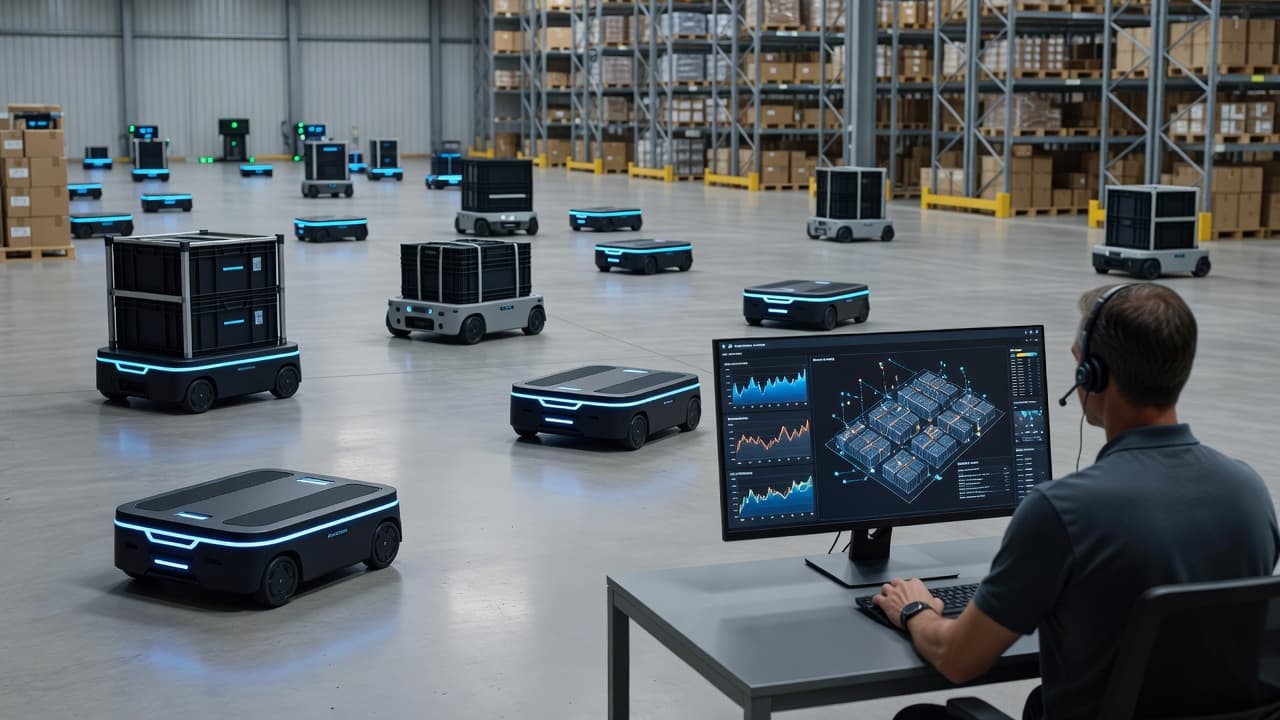 ### How RobOps turns one working robot into a fleet that can scale
One robot can survive on expert attention. A fleet can't. Once a company has dozens of robots, it needs remote management, repeatable rollout steps, clear escalation paths, and shift-by-shift uptime.
A single demo can survive on heroics. A production fleet depends on process. RobOps makes that process real, so the system keeps working when demand spikes, layouts change, or a new site comes online.
Why traditional software ops cannot solve robot problems on its own
Software tools help, but robots hit problems that servers never see. Wi-Fi drops, blocked aisles, worn wheels, drifting sensors, low batteries, and moved shelving can push performance off target in minutes.
Because of that, teams need dashboards and physical maintenance. They also need incident review, site support, and clear recovery playbooks. If you come from software, MLOps for robots is the closest cousin, but RobOps reaches further because it owns what happens on the floor too.
The AI jobs in robotics opening up right now
This is why the market for AI jobs in robotics is widening. Many of the open roles sit between research and operations, and many don't require a PhD or years in a robotics lab.
Robotics operations roles that keep fleets running every day
Robotics operations specialists watch fleet dashboards, respond to alerts, and document failures. Fleet operators may reroute traffic, recover stalled units, or pause activity in a zone after a safety event.
Deployment managers and field integration leads prepare new sites, test maps, coordinate vendors, and manage launch week. Support engineers often handle the strange problems that show up after go-live, when a sensor behaves differently under real traffic than it did in testing.
Technical roles that sit between AI, hardware, and the floor
Robotics engineers, autonomy engineers, and computer vision engineers connect model behavior to real work. They tune perception for picking, sorting, inspection, and delivery, then work with mechatronics or integration engineers when hardware limits software performance.
That mix matters because robot success is physical. Better detection might reduce failed picks in a warehouse. Better motion planning might cut slowdowns near people on a factory line. The work lives at the boundary between code and motion.
Why data, not just code, is becoming a core robotics skill
Robots produce a steady stream of telemetry, task logs, camera output, and sensor readings. That data helps teams review incidents, retrain models, spot drift, and improve daily operations.
The State of Robotics 2026 reports that robotics data collection costs fell from about $340 an hour in 2024 to $118. Lower costs make continuous feedback loops much easier to run. In practice, that means people who can read logs, trace failures, and turn messy evidence into a fix are becoming more valuable every quarter.
What makes RobOps different from classic DevOps and MLOps
Software teams already know how to ship code and manage models. Robots add a physical layer, so the operating model changes.
A quick comparison helps:
| Area | DevOps | MLOps | RobOps |
|---|---|---|---|
| Main focus | Apps and services | Models and data pipelines | Robots, sites, and fleet behavior |
| Common failure | Outage or bad deploy | Model drift or data issue | Battery fault, blocked path, bad calibration |
| Success metric | Availability | Production model performance | Safe uptime and completed tasks |
A good primer on what MLOps covers shows where that boundary sits. RobOps starts where the robot meets the building, the battery, and the person nearby.
Robots live in the physical world, so failure looks different
A cloud service fails in logs. A robot can fail in motion. It may miss a shelf opening, stop because a person crossed its path, lose calibration after a bump, or struggle because the facility changed overnight.
As a result, RobOps teams work across IT, facilities, safety, and maintenance. They don't only debug code. They manage the conditions that let autonomy work in the first place.
Fleet uptime and safety matter more than a single model score
A model can look great in testing and still create trouble on the floor. Robot teams care more about uptime, task completion, recovery time, safe interactions, and cost per task than a benchmark number on a slide.
That focus changes hiring. Companies want people who can keep operations stable, because a reliable system beats a flashy demo when budgets get reviewed.
Why human oversight still matters in autonomous systems
Autonomy still needs escalation paths. When a robot gets confused, enters a restricted area, or fails a handoff, someone has to review the feed, intervene remotely, or dispatch a technician.
Human-in-the-loop support also matters during updates, incident review, and compliance work. RobOps doesn't remove people from the picture. It gives teams a way to manage autonomy responsibly at scale.
The real-world industries driving demand for RobOps talent
Demand isn't theoretical. It's tied to sectors already buying and operating large robot fleets. Current 2026 estimates show logistics and warehousing leading commercial deployments with about 41,000 units, while semiconductor manufacturing follows with roughly 22,500.
Warehouses and fulfillment centers
Warehouses put RobOps under a spotlight. Autonomous mobile robots, sorting systems, and picking support all need route planning, charging schedules, exception handling, and fast recovery when a tote jams or an aisle closes.
Companies such as Amazon Robotics and Symbotic don't benefit from one clever robot. They benefit from thousands of predictable tasks completed on time, across long shifts, with minimal disruption.
Manufacturing, inspection, and quality control
Manufacturers need consistent output, so cobots and vision systems have to stay calibrated and safe around people. The collaborative robot market is projected to grow from $4.26 billion in 2025 to $18.94 billion by 2031, which points to more jobs around deployment, inspection workflows, and line support.
Vendors like ABB and FANUC already depend on teams that can bridge software updates with physical changes on the floor. That work is pure RobOps.
Healthcare, labs, and other high-stakes environments
Hospitals and labs raise the bar even higher. Delivery robots, lab automation platforms, and support systems must work around staff, samples, and strict procedures.
A missed task in these settings can delay care or spoil materials. Because the cost of error is higher, RobOps in healthcare leans hard on monitoring, audit trails, and careful recovery steps.
How to build a career in AI jobs in robotics without starting from scratch
You don't need to begin as a robotics researcher. Many people move into these roles from software, IT, data, electrical work, mechanical work, or field service.
The skills employers want most
Employers want systems thinking more than buzzwords. You need to troubleshoot across sensors, networking, hardware, and software, then explain the problem clearly to engineers and operators.
Basic robotics, data analysis, cloud tools, safety awareness, and calm communication all matter. If you're coming from ML or data, a plain-language MLOps overview can help you map your current skills onto robotics workflows.
Good entry paths for students and career switchers
Students can build experience through lab work, robotics clubs, internships, and capstone projects. Career switchers often land first in support, testing, deployment, or field integration roles.
Hands-on experience matters because real systems rarely fail in neat textbook ways. Employers want proof that you can stay useful when the issue spans software, hardware, and site conditions at the same time.
How to stand out in a growing but still new field
A strong portfolio beats a vague resume. Show logs you analyzed, demos you built, incidents you debugged, or small fleet simulations you ran.
Short case studies work well because they show how you think. Explain the problem, the evidence, the fix, and the outcome. In RobOps, practical problem-solving is easier to trust than polished theory.
Conclusion
The next wave of AI work is moving into places where software meets motion. RobOps sits at that boundary, and it turns smart machines into reliable systems people can trust.
That's why AI jobs in robotics are expanding beyond model builders. Companies need people who can deploy, watch, repair, improve, and scale robot fleets in warehouses, factories, hospitals, and labs.
The big opportunity belongs to people who can keep robots useful after the demo ends.